Fork me on GitHub

浅谈ArrayList

一、ArrayList的继承体系及性质

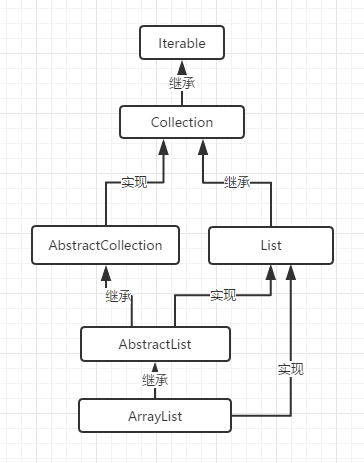
1.ArrayList的继承体系
ArrayList继承AbstractList类,实现List等多个接口:
1

AbstractList又继承AbstractCollection类,实现List接口:
2

AbstractCollection实现Collection接口:
3

Collection接口继承Iterable接口:
4

List接口继承Collection接口:
5

所以ArrayList总体继承体系为:
6

二、ArrayList的方法使用和源码解析

1.构造方法:

1
2
3
4
5
6
7
8
9
10
11
12
private Object[] array;  //定义一个泛型的数组array

private int size; //当前数组长度


public ArrayList() {
array = new Object[10]; //默认情况下使用ArrayList会生成一个大小为10的Object类型的数组
}

public ArrayList(int capacity) {
array = new Object[capacity]; //新建一个用户初始值大小的object数组。
}

默认情况下使用ArrayList会生成一个大小为10的Object类型的数组。

实例:

1
2
3
4
5
6
7
8
9
10
11
12
13
14
15
16
17
18
19
public static void main(String[] args) {
List<String> list1 = new ArrayList<>();
list1.add("1");
list1.add("2");
list1.add("3");
list1.add("4");
//list1.add(3,"1");
list1.remove("2");
//list1.set(2,"1");
//System.out.println(list1.size());
//System.out.println(list1.get(4));
//System.out.println(list1.remove(3));
//System.out.println(list1.isEmpty());
//System.out.println(list1.size());
list1.forEach(item -> {
System.out.println(item);
});

}

2.add(T e)方法
功能:在末尾添加一个元素。

1
2
3
4
@Override
public void add(T e) {
array[size++] = e;
}

在数组的末尾元素时,当前的数组长度加一。

3.add(int index, T e)方法
功能:在指定下标 index 位置中设置一个元素,返回旧值

说明:加入元素e之前先要检查数组到大小首先检查index的值是否在0到size之间,可以为size.然后将index以及后面的元素向后面移动一位,将e放在index位置,size++。如果下标index不在0到size之间,则说明数组越界。

1
2
3
4
5
6
7
8
9
10
11
12
@Override
public void add(int index, T e) {
if (index > 0 && index <= size) {
for (int i = size - 1; i >= size; i--) {
array[i + 1] = array[i];
}
array[index] = e;
size++;
}else{
throw new RuntimeException("数组越界");
}
}

4.set(int index, T e)方法
功能:在指定下标 index 位置中设置一个元素,返回旧值

1
2
3
4
5
6
7
8
9
10
11
12
@Override
public T set(int index, T e) {
if (index > size || index<0 ) {
throw new RuntimeException("数组越界");
}else if(index == size){
array[index] = e;
size++;
} else {
array[index] = e;
}
return null;

将e放到ArrayList下标为index的位置,此时就要分情况来讨论:

  • 当 index < 0 或者 index > size,说明数组越界了
  • 当 index = size 时,相当于数组在末尾添加了一个新的元素,此时直接把元素e放在下标等于index的位置,当前size++。
  • 当 0<=index<size 时,说明在当前数组内,则直接把直接把元素e放在下标等于index的位置/

5.get(int index)方法
功能:返回指定下标为index的元素

1
2
3
4
5
6
7
@Override
public T get(int index) {
if(index < size && index>=0) {
return (T) array[index];
}else {
throw new RuntimeException("数组越界");
}

说明:获取指定元素的时候,当 0<=index<size 时,此时在数组内,返回指定下标元素,其余情况数组越界会抛异常。

6.remove(int index)方法
功能:根据指定下标 index 删除指定元素,并返回删除的值

1
2
3
4
5
6
7
8
9
10
11
12
13
@Override
public T remove(int index) {
if(index>=0 && index<size) {
Object m = array[index]; //获取删除元素的值
for (int i = index+1 ;i<=size-1;i++){
array[i-1] = array[i]; //将index后面所有的元素往前移一位。
}
size--;
return (T) m;
}else {
throw new RuntimeException("数组越界");
}
}

说明: 删除指定下标为index的元素的值前,首先要确定其范围,当 0<=index<size 时,此时在数组内,可以进行删除操作。首先获取要删除的元素的值将其定义成一个泛型 m,随后将下标为index后面的元素往前移动一位,比如将array[index+1]移动到array[index]上,以此类推,然后数组当前大小还要-1,最后返回删除的m的值。如果不在0<=index<size视为数组越界。

7.boolean remove(Object o)方法
功能: 删除指定的值为e,并返回是否删除成功

1
2
3
4
5
6
7
8
9
10
11
12
13
14
15
16
17
18
19
20
21
22
23
24
@Override
//删除元素
//只会删除第一个出现的元素。
public boolean remove(Object o) {
if (o == null){
// for循环遍历元素。找出待删除元素的index
for (int index = 0;index < size;index++){
if (array[index] == null) {
remove(index);
//此处导致只会删除第一个找到的相等元素
return true;
}
}else{
// for循环遍历元素。找出待删除元素的index
for (int index = 0; index < size; index++) {
if (e.equals(array[index])) {
remove(index);
//此处导致只会删除第一个找到的相等元素
return true;
}
}
}
return false;
}

8.int size()方法
功能: 获取列表大小

1
2
3
public int size() {
return size;
}

9.boolean isEmpty()方法
功能: 判断是否为空

1
2
3
4
5
6
7
8
9
@Override
public boolean isEmpty() {
if(size == 0){
return true;
}else{
return false;
}
}
}

10.forEach(Consumer action)方法
功能:遍历整改数组

1
2
3
4
5
6
@Override
public void forEach(Consumer<T> action) {
for(int i = 0;i<size;i++){
action.accept((T) array[i]);
}
}

三、总结

Arraylist实现是基于动态数组点数据结构,动态大小是可变的,随机访问和遍历元素时,提供更好的性能。读的速度很无奈快,删除很麻烦。

推荐:

1.ArrayList-你可能需要知道这些

2.Java入门系列:实例讲解ArrayList用法

-------------本文结束感谢您的阅读-------------
谢谢请我吃辣条!!!
0%